
Lion’s Gate & Sirius Rising
I produced a video about the genesis of the Lion’s Gate idea in our time. I hope you enjoy it.

Click here to view
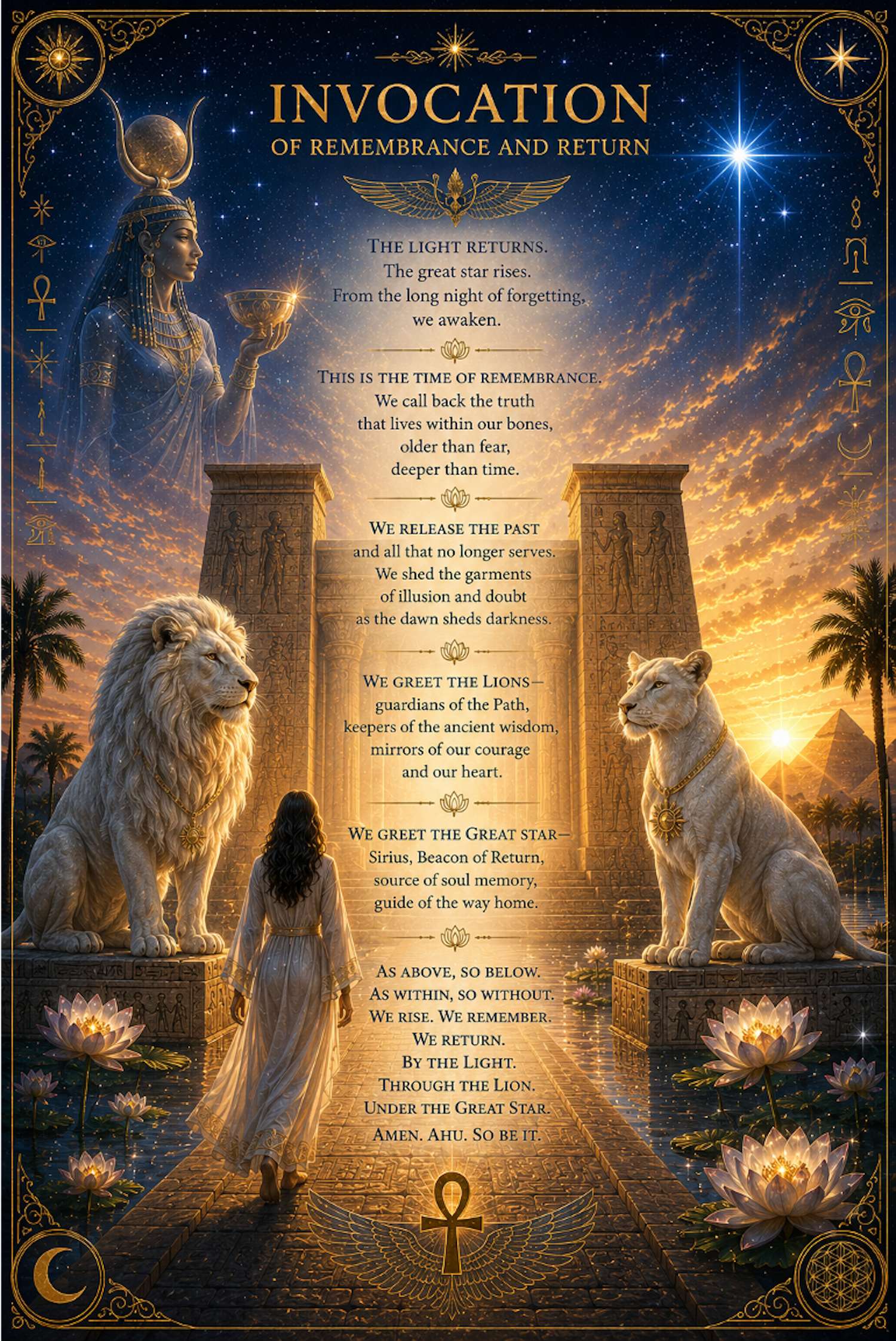
Lion’s Gate Invocation
Breaking Bread & Sharing Life

The story of sharing bread spreads around the world. Listen to my story of the global traditions.
Waking Dreams: Reading the Signs With Eyes Wide Open

“Hope is a Waking Dream.” Aristotle
When someone says they are daydreaming the usual connotation is they are lost in idle fantasy, or worse in the view of our modern world, wasting time. A daydream is described as a voluntary, or semi-conscious, imaginative fantasy or vision while awake. I think the criticism is unfair as many have reported receiving powerful creative inspiration this way.
By contrast, what psychologists call a waking dream is considered to be quite different from a daydream. A waking dream is described as a sudden sensory experience that happens while awake. Waking dreams are similar to sleeping dreams in that they penetrate ordinary reality due to REM (Rapid Eye Movements) sleep activation. Waking dreams can be so vivid that they can be briefly mistaken for “reality.” I would argue instead that such states are a heightened sense of reality.
To me the deeper question is the true nature of reality that physics and metaphysics explores. Some say that life is but a dream–one where we sleep and one where we sleepwalk. When we are not sleeping our brain waves are primarily in the beta range and our focus is on the outer world. When we sleep and dream our brain waves slow to alpha and theta and our focus becomes internal and more receptive to higher guidance, which is why cultures across time have valued the guidance in dreams.
Native Peoples
Indigenous cultures view dreams and waking dreams as sacred, literal extensions of reality that provide guidance, healing, and connection to ancestral or spiritual realms. Indigenous perspectives consider waking dreams to be not only symbolic but real experiences. Waking dreams can be a way to access realities that are usually inaccessible while awake.
Australian Aboriginal Dreaming, or Dreamtime, represents a complex, continuous reality that links past, present, and future through stories, art, and ceremony. When attuned this way, waking (and sleeping) dreams act as conduits to the spirit world. Modern Indigenous perspectives also emphasize reclaiming these traditions from colonial perspectives that often labeled them primitive or superstitious.
Enhanced Guidance
What if rather than being unusual, some of our most powerful and important guidance could come from waking dreams? I believe if we watch for the symbols and learn to interpret them, we can gain valuable insight. Instead of what might appear as a meaningless distraction or a mere fairy tale, we might receive guidance to solve current problems. This adds a powerful component to our nighttime dream messages. Inviting and expecting waking dreams adds richness to daily life. You might ask for a waking dream to get more guidance from a powerful sleeping dream you had that morning.
Examples of Waking Dreams
- You stop behind car and the license plate is a word with a strong message
- Your eyes are drawn to a clock and the time is 11:11 or 4:44
- Suddenly a rainbow appears in the sky
- A feather appears in your path, or you see an animal with meaning
- You hear lyrics to a song or notice a billboard that speaks to you
As described in my dream books, (Symbol & Synchronicity and Tarot & Dream Interpretation), having a dreamwork practice opens a communication channel with your higher guidance. This counsel comes from the level of your Soul and is tailored just for you. The effort of learning to decode the symbolism pays valuable dividends.
Seven Steps
Both books can be used with a waking dream in the same way as sleeping dream. The Seven Steps in Dreamwork©process takes a waking dream to a deeper level. Give your waking dream a title and think of an image that captures the central theme. Examine what’s happening in your life right now and how the experience of a waking dream is offering guidance about current conditions or a long term pattern of behavior.
Guidance is available 24/7 when we learn to notice the messages that are woven through ordinary life. Invite these moments of magic and meaning to illuminate your path.